Fleetstock Academy
Modern Industrial Technologies Series
Topic No. 0007
Methodology for Calculating Fluid Requirements in Production Processes
Prepared by: Fleetstock Engineers
Published by: Fleetstock Academy
Version: 1.0
Preface
Automation of production processes and precise resource management in modern industrial enterprises have further increased the importance of fluid systems. Water, oil, chemical solutions, raw materials and other technological fluids are used as the main resources at various stages of production. Therefore, the correct calculation of fluid requirements is considered one of the important technical issues in terms of production continuity, technological stability, product quality and resource efficiency.
For the correct planning of the fluid system in production processes, a complex methodological approach is required, including determining the required fluid volume, measuring actual consumption, calculating the compliance coefficient, taking into account technological losses and analyzing real monitoring indicators. This methodology ensures the proper use of resources, reduction of losses and continuity of production.
Goals and objectives
Goal
To study the methodology for calculating the compliance of fluid systems used in production processes with technological requirements and analyze its application with automated systems.
Tasks
Investigation of the role of fluids in production processes;
Determination of fluid demand;
Measurement of actual consumption;
Calculation of the compliance coefficient;
Consideration of technological losses;
Study of monitoring at critical control points;
Analysis of the application of information technologies and analytical systems.
1. The role of fluids in production processes
In production processes, fluids, especially water, oil, chemical solutions and raw materials, play a key role in the implementation of technological operations. In an automated production environment, fluid systems ensure the stability of production by integrating with mechanical, chemical and thermal processes.
Liquids are used in the following systems:
Cooling systems;
Mixing and homogenizing units;
Washing and disinfection lines;
Lubrication systems;
Automatic filling and dosing lines;
Chemical processing and reaction processes.
For the stable operation of these systems, it is important to provide the liquid in the required volume, at the correct pressure and with the specified quality indicators.
2. Methodology for calculating liquid requirements
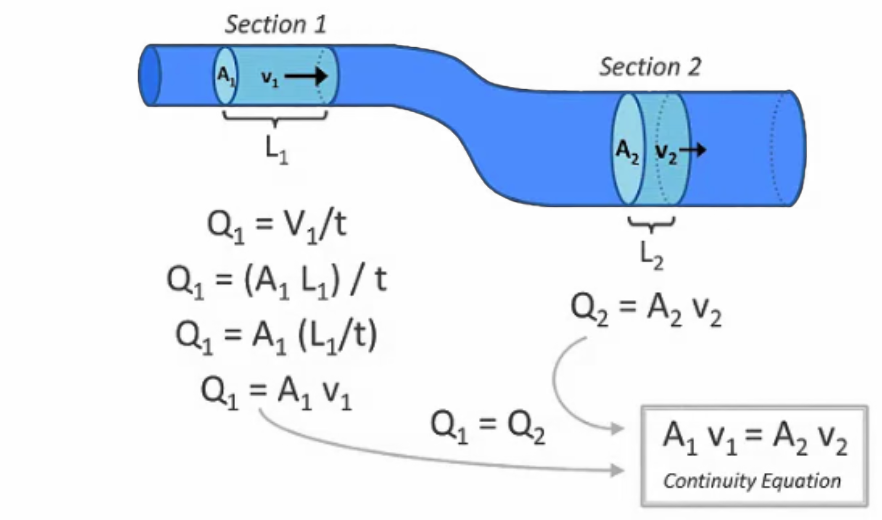
The main stage of calculating the compliance of liquids with the requirements is to determine the total liquid volume required according to the production plan. The liquid consumption for each technological operation is determined and the total system demand is calculated.
The total required liquid amount is calculated by the following formula:
Q_t = N × q
Where:
Q_t — total required liquid amount;
N — number of products to be produced;
q — liquid consumption rate for one product.
In practical calculations, a safety factor is applied in accordance with the characteristics of the production process:
Q_h = Q_t × (1 + L)
Where:
Q_h — adjusted planned liquid volume;
L — loss percentage.
This approach ensures stable operation of the system during peak load, evaporation, leakage and technological fluctuations.
3. Measurement of actual consumption and calculation of the compliance coefficient
Actual measurement of liquid consumption is based on recording the actual amount of liquid used during production. For this purpose, the following measuring and control devices are used:
Flow meters;
Flow measuring devices;
Level sensors;
PLC control systems;
SCADA and ERP platforms.
The actual amount of liquid used is determined by the following formula:
Q_f = Q_1 + Q_2 + Q_3 + … + Q_n
Where:
Q_f — actual liquid used;
Q_i — the amount of liquid used at each stage;
n — the number of stages.
The main indicator of the required compliance is the compliance coefficient:
K_u = Q_f / Q_t
Where:
K_u = 1 — complete compliance;
K_u > 1 — the possibility of excess consumption, loss or leakage;
K_u < 1 — a deficiency or measurement error in the norm.
Analysis of the compliance coefficient allows you to assess the efficiency of resource use in the production process.
4. Taking into account technological losses
In the production process, liquid losses may occur due to evaporation, leakage, filtration, losses during transportation and technical malfunctions. For this reason, a correction factor is applied in the calculations.
The percentage of losses is taken into account as follows:
L = 3–5%
This indicator may vary depending on the characteristics of the production area, the type of liquid and the intensity of the technological process.
Correct assessment of technological losses provides the following advantages:
Refinement of resource planning;
Reduction of production costs;
Timely detection of leaks and malfunctions;
Maintaining a stable fluid balance.
5. Monitoring at critical control points
The compatibility of liquids should be checked especially at critical stages. Real-time data collection at these stages ensures stable production.
Critical control points include:
Mixing stage;
Cooling system;
Washing and disinfection processes;
Automatic filling lines;
Dosing and dispensing stages.
Continuous monitoring of liquid consumption, temperature, pressure and flow rate at these points helps to maintain stable product quality.
6. Application of information technologies
In modern enterprises, the calculation of liquid compatibility is carried out by automated systems. These systems provide digital monitoring and analytical evaluation of the production process.
The main technologies used:
PLC control systems;
Sensor and IoT devices;
Database and analytical programs;
SCADA monitoring platforms;
ERP integration systems.
These systems:
Perform real-time analysis;
Notify of deviations from the norm;
Automatically generate reports;
Archives production indicators;
Supports the decision-making process.
7. Analytical evaluation and optimization
The collected data is analyzed using statistical methods. This analysis allows you to assess the variability of fluid consumption, process stability and resource utilization efficiency.
Main analytical methods:
Average consumption analysis;
Trend analysis;
Standard deviation calculation;
Outlier analysis;
Analysis of comparative production indicators.
This approach provides the following results:
Efficient use of resources;
Energy and raw material optimization;
Increasing production efficiency;
Reducing technological losses;
Improving automated control.
Conclusion
The methodology for calculating fluid compliance plays an important role in the effective management of production processes. Thanks to accurate calculations, measurements and analytical control, the enterprise reduces resource losses, maintains stable product quality and implements automation of technological processes more efficiently.
This methodology is a set of systematic calculation and analysis methods that determine whether the amount of fluid used during production complies with the planned production volume, technological standards and quality requirements. Its application ensures the proper use of resources, reduction of losses and continuity of production.
This methodology constitutes the main information base of the decision-making process, especially in automated production systems.
Contact us
Mob: (+994 77) 311 56 66
Tel: (+994 12) 347 93 06
E-mail: info@fleetstock.az
Web: www.fleetstock.az
Fleetstock Group